The Stonewall riots, as we all know by now, were a series of spontaneous, violent demonstrations by members of the LGBT)community against a police raid that took place in the early morning hours of June 28, 1969, at the Stonewall Inn in the Greenwich Village neighborhood of Manhattan.

They are widely considered to constitute the most important event leading to the gay liberation movement and the modern fight for LGBT rights. It's been said since then, that the bar was mafia owned, and that it's clients were actually a mix of middle class white male gay men and various parts of the gay community from lower class to poor. There are many different stories as to it being a drag hang out and not, but there is no denying, that night, there was many from the community present in the drinking hole, and that many of the drag queens and cross dressers were not taking shit that night. A straight male friend of mine always said if he is ever in a fight, he hopes one of his drag queens friends are present because they don't take shit, and I have to say they don't! But that night were some brave souls that must be remembered.


Marsha P. Johnson was a transwoman who became an important face to the gay, lesbian, bisexual, and transgender community in New York City. She was recognized by being herself and fearing no judgment of the harassment and ridicule of dressing and living as a woman, while having the masculine features of a man. The hardships of a transgender individual were nothing new to Marsha who herself was living on the streets of New York without a permanent home or financial and living arrangements. This tended to be a normal struggle of drag queens and transgender individuals. Marsha P. Johnson felt these people who wanted nothing more than to be their selves deserved support from the growing LGBT community in New York. Along with fellow transgender activist Sylvia Rivera she founded the Street Transvestite (now Transgender) Action Revolutionaries to help others out there facing the struggles of an unaccepting society.Marsha was an eccentric woman who was known for her exotic hats and jewelry which stood out to the public and attracted attention to her. When she was wearing these items or any female clothing she was Marsha P. Johnson. But there were times when she went back to her male persona of Malcolm. Along with STAR and GLF activism, Marsha posed for a collection of artist Andy Warhol’s paintings and photographs. “Ladies and gentleman” was the title of one of Warhol’s works that Marsha posed for in 1975. In the painting Marsha is not mentioned by name, or any of the male to female transgenders, which was to protect them at the time.Marsha passed away on July 6, 1992. Her body was found in the Hudson River in New York. Police and investigators ruled her death as a suicide, but people who knew her and were close to her insisted she was not suicidal. Witnesses saw Marsha being harassed earlier in the day and wanted a full investigation of her death as a murder. There has been no criminal investigation to the death of Marsha P. Johnson.
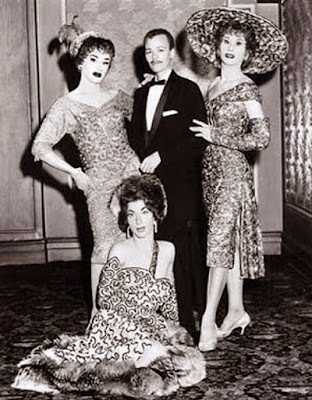

The name Stormé DeLarverie may not ring a bell, but it should. Some have referred to her as “the Gay Community’s Rosa Parks.” She fought the police during the Stonewall Rebellion in 1969 and has been identified by many – and has identified herself – as the legendary “Stonewall Lesbian” whose assault by the police became the pivotal moment in the street disturbances that spurred the crowd to action. She was also a singer who toured the country as the cross-dressing emcee of the famed Jewel Box Revue, in which she was the only female performer. Radio City Music Hall, the Apollo Theater, and the Copacabana are a few of the venues where she has graced the stage, either with the Jewel Box Revue or as the frontwoman of various bands. She was the subject of at least three documentaries, including Stormé, which was produced by her friend Sam Bassett. She passed away at 94 years old in her residence which was a sparsely furnished room on the sixth floor of a nursing home in Brooklyn.


And most people do not know her name. She was Sylvia Rivera, who occupies a unique place in LGBT history. Rivera helped lead the charge on the night of the Stonewall riots in New York City, considered the beginning of the LGBT rights movement. As drag queens fought back against a police raid at the gay bar, it is said she was heard shouting “I’m not missing a moment of this – it’s the revolution!”While Rivera’s presence at this landmark event has been disputed, there is no denying that she was an LGBT civil rights pioneer. Yet she remains little known, even within the LGBT community. Rivera lived a turbulent life. She was born in 1951 in New York to a Puerto Rican father and a Venezuelan mother. Rivera’s stepfather threatened to kill her and her mother when Rivera was three. Shortly afterwards, Rivera’s mother killed herself. At ten years old, Rivera was on her own in Times Square, eking out a living as a sex worker. It was an unbelievably dangerous existence, not only because of the drugs and violence on the streets, but because of the continual threat of police brutality.Yet living on the street also gave Rivera great empathy for others in the same situation. After the Stonewall riots, she became part of the nascent gay rights movement – at a time when transgender people were not necessarily welcomed.With her friend and fellow activist Marsha P. Johnson, Rivera founded STAR (Street Transvestite Action Revolutionaries) and opened a shelter for homeless transgender youth. She was also an early member of groups like the Gay Activists Alliance and the Gay Liberation Front, which were the forerunners of today’s LGBT advocacy organizations.Rivera passed away in 2002 from liver cancer. She was 50. Since then, she has been recognized with a street bearing her name in New York City, and tributes from LGBT community organizations. New York is also home to the Sylvia Rivera Law Project,, an organization that works to secure the rights of gender non-conforming people.
And this year in New York City, the State of New York is to host Stonewall 50/WorldPride, celebrating the 50th anniversary of Stonewall and it is believed that 2019 will be the largest international LGBT pride celebration held in history.


